 Doors · Chaukhat · Windows
Imported and African Teak: What to Check Before You Buy
“African teak” can be real teak or a completely different wood. Here is how to check the species, heartwood, seasoning and defects, and how to compare quotes on the finished door.

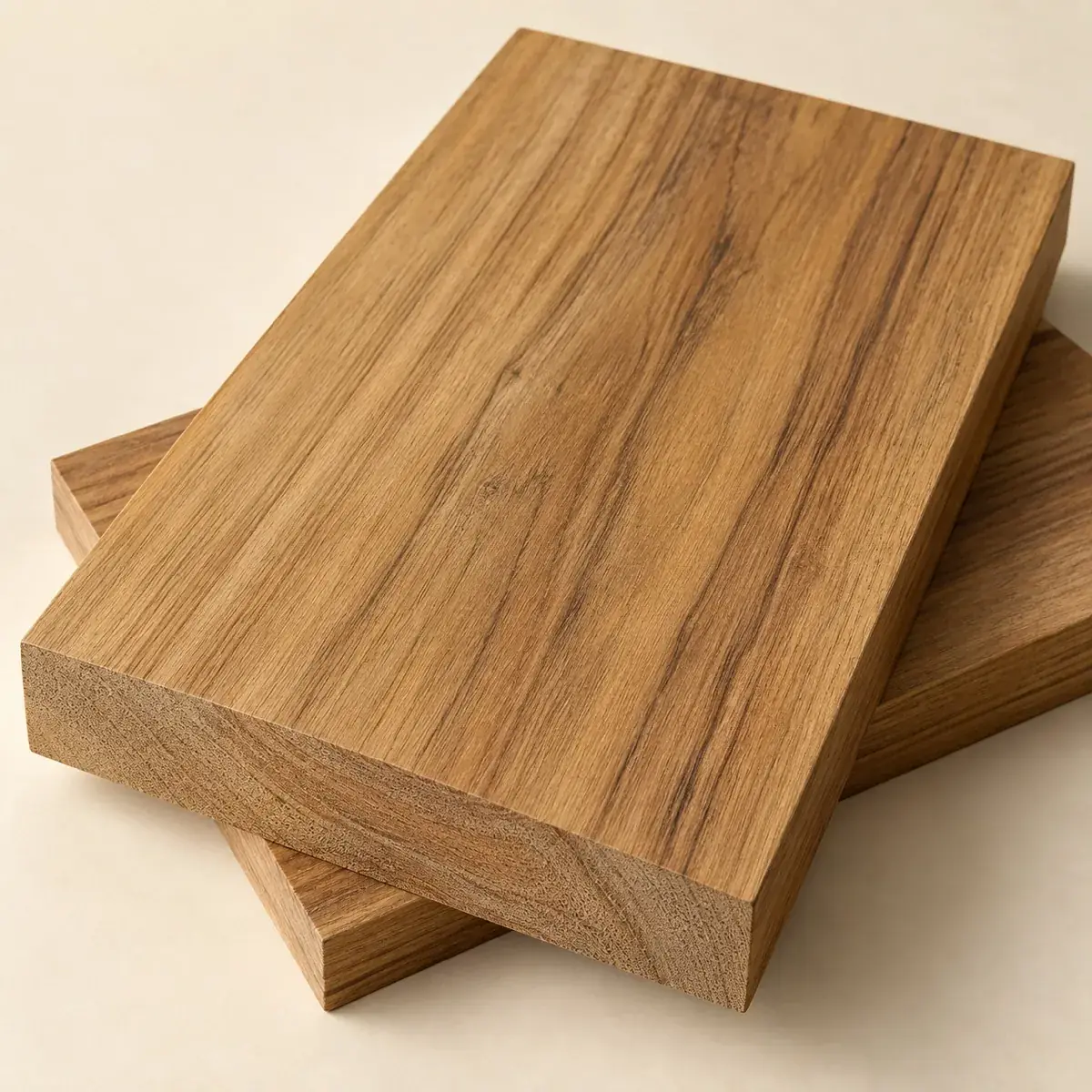
Teak colour changes from lot to lot. A sample you have approved is the best reference for your order.
In short
- Real teak (sagwan) is Tectona grandis. “African teak” is also used for Iroko, a different wood, so get the species written on the bill.
- A country name like Ghana or Tanzania tells you where the wood came from, not its grade. Judge the heartwood, usable size, defects and moisture.
- Time on a ship is not seasoning. Ask for current moisture readings before the wood is machined.
- Compare quotes on the finished door, not only the rough CFT rate. Waste, joints, hardware, polish and fitting all count.
Two bundles can both be sold as “imported teak”, look the same in the yard, and still behave very differently once they become doors. So before you compare rates, find out three things: what the wood really is, where it came from, and how much of the bundle is good, properly dried timber you can actually use.
Be extra careful with the name “African teak”. It can mean real teak grown in Africa, but the same name is also used for other, unrelated woods. A country name tells you where the wood came from. It does not tell you its quality.
Is “African teak” real teak?
Real teak (sagwan) is Tectona grandis. It grows naturally in parts of South and Southeast Asia, and it has been planted in other hot countries, including in Africa. Plantation-grown Tectona grandis is real teak, whichever country it grew in.
The problem is that “African teak” is also a common name for Iroko (Milicia excelsa). Iroko and teak are different woods. A seller calling a board “teak” does not give it teak's qualities.
Where imported teak comes from
There are teak plantations in Ghana, Nigeria, Côte d'Ivoire (Ivory Coast), Togo, Benin and Tanzania, and in countries outside Africa too. What you get depends on the supplier and the particular shipment.
Keep two things separate: where the tree grew, and the country or port it was shipped from. A port name or a trade label does not, on its own, prove where the tree was cut.
“Imported teak” and “plantation teak” are not opposites. Imported means the wood crossed a border. Plantation means the trees were planted and grown on a farm. The same lot can be both, and neither word tells you the grade. Our plantation teak guide covers that side in more detail.
What decides the quality
Heartwood and usable size
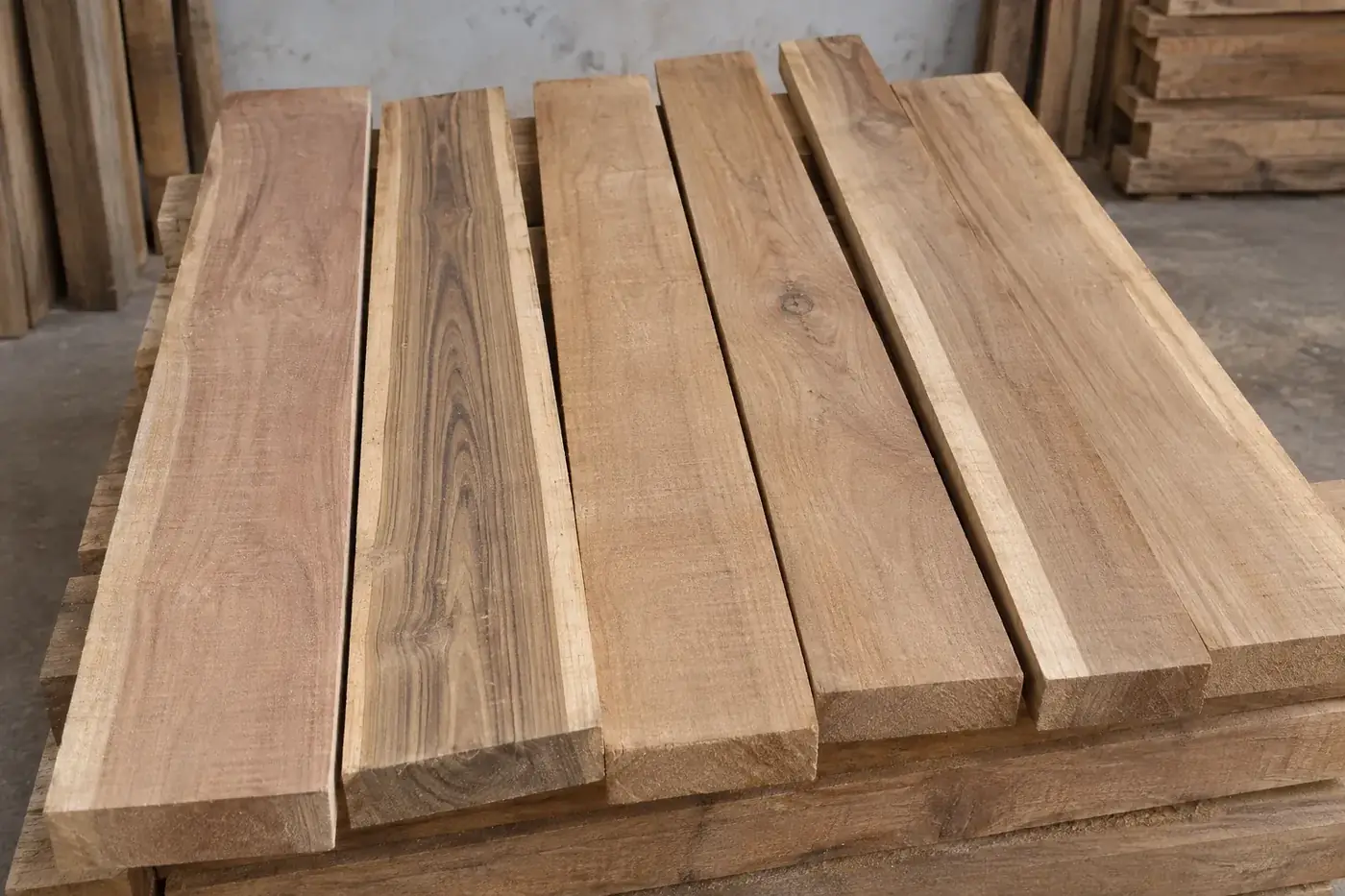
Heartwood is the inner core of the log. Sapwood is the outer layer just under the bark. Ask how much sound heartwood you will get in the lengths and widths your design needs. Check the sapwood separately, and don't assume it will last like teak heartwood.
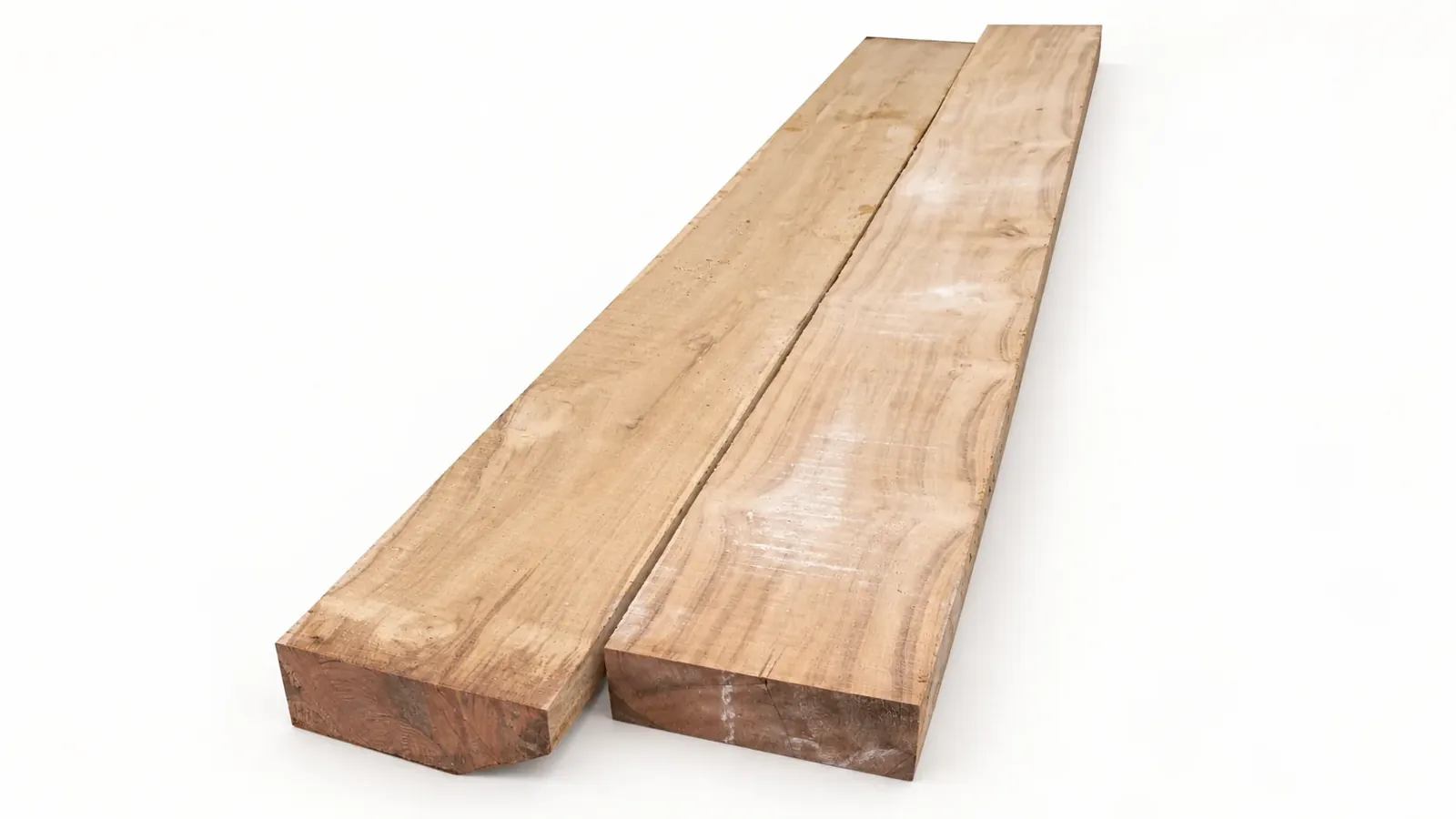
A big log or a wide rough plank can lose a lot of wood once the defects and sapwood are cut away. For doors and chaukhat, compare the finished pieces you can actually get, not the outside size of the rough timber.
Grain, colour and defects
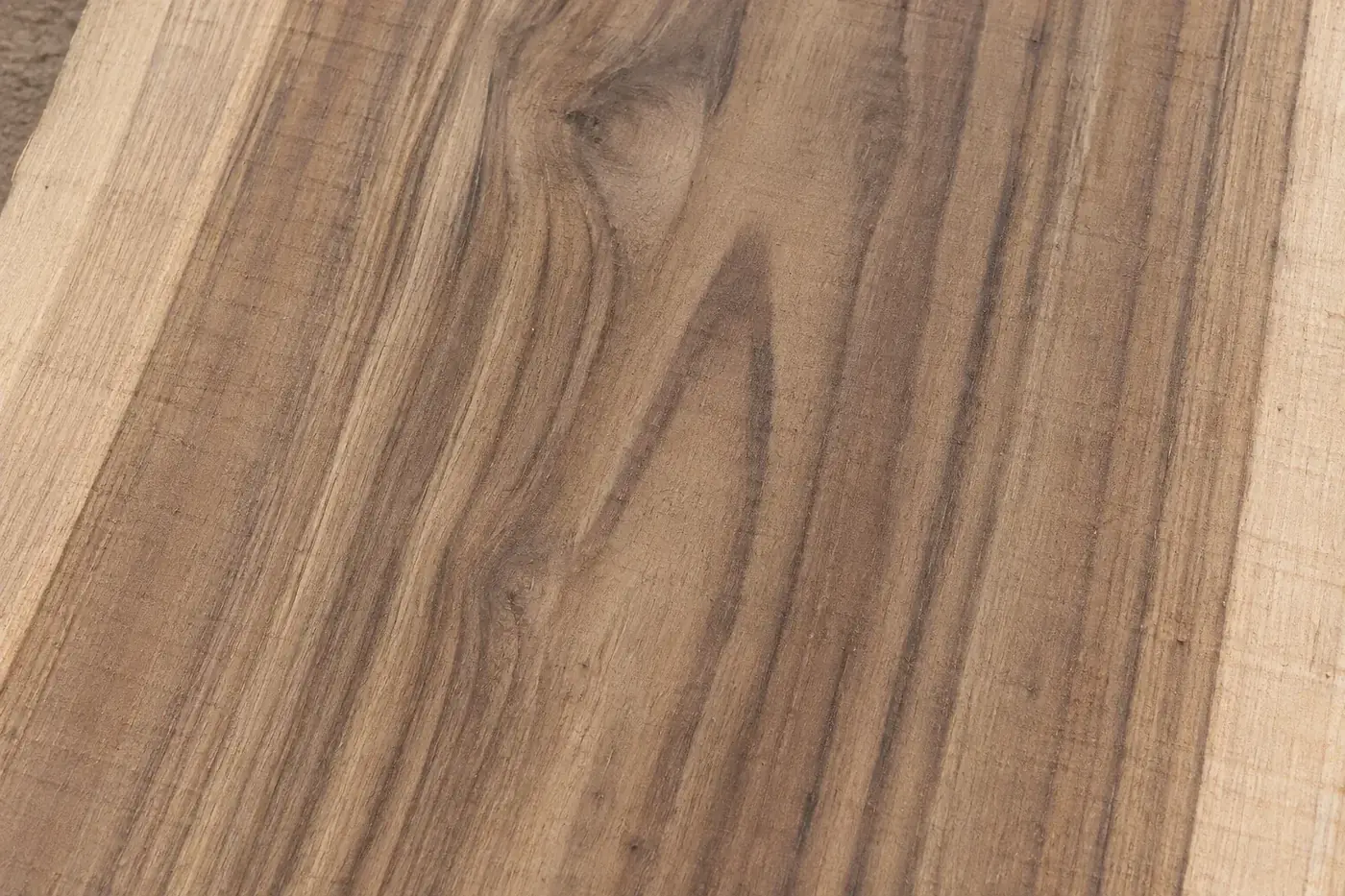
Teak can be anything from light golden-brown to dark brown, and it varies from piece to piece and even between faces of one piece. The grain can be straight or less regular. Look at plain, planed, unpolished samples from the actual stock you will receive.
Check knots, cracks, bends and damaged spots against the parts that will be cut from that wood. A nice grain pattern on a panel does not make up for a faulty piece on the side where the hinges go. For a double door, agree beforehand how the colour and grain will be matched on both leaves.
Where and how the tree grew
The plantation site, how it was managed, the individual tree and how the wood was processed all affect the timber. A country label or a claimed tree age is not enough to judge a plank.
Don't assume all fast-grown teak is bad, or that wood above a certain age is automatically premium. Ask for the things your door needs and that can be checked: sound usable size, enough heartwood, acceptable defects and the right moisture.
Moisture and storage
Weeks on a ship do not season the wood. Imported timber can take in or lose moisture while it is stored and handled, so its condition should be checked before machining.
Ask for current moisture readings and how they were taken. The right target depends on what is being made and where it will be used. There is no single percentage for every indoor and outdoor job. Correct meter settings and readings from several pieces matter more than one good-looking number.
Seasoning before the door is made
Air drying and kiln drying can both be part of preparing the wood. What matters is the result:
- the right moisture for the job
- moisture fairly even through the stock
- drying stress kept under control
- no serious drying defects
After drying, the boards must stay covered and properly stored. Poor storage can undo good drying. If you hear “seasoned abroad” or “lying in stock for years”, treat it as the start of your questions about its condition today, not the end of the check.
The maker should plan wood selection, drying, machining and assembly together. Gaps, panels and joints must leave room for the normal movement of the wood.
Doors, windows, chaukhat and furniture
Doors
Good imported Tectona grandis can be used for solid and panelled doors. Choose the stock to suit the design, and judge the frame, joints and hardware together as one finished door.
For a main door that gets rain and strong sun, agree on the protection and upkeep before you choose the finish. An unpolished display sample is good for judging the wood, but it does not decide how the outside of your door should be finished.
Windows and chaukhat
Windows need care with water drainage, joints, end grain and coating. A chaukhat needs sound, straight sections and good places to fix it to the wall. For both, write the finished size after planing in the order, not only the rough-sawn size.
Furniture and decorative work
In furniture, grain selection, panel layout and polish play a bigger part in the look. Decide if you are happy with natural colour differences or want a more even look.
Teak has natural oils and other substances (extractives) that can affect how glue and polish behave. The maker should use products that work on teak, prepare the surface the way those products' makers recommend, and get a sample finish approved by you before the full order.
Termites (deemak) and damp
No wood should be sold with a promise that insects or fungus can never damage it. Teak heartwood is known for lasting well, but sapwood, the quality of the wood and where it is fitted still matter.
Keep the wood away from damp that can be avoided, use sound construction details, and arrange any extra protection your site needs. A wood's good name does not replace checking it and looking after it.
Defects to check before buying
Don't stop at the top boards of a bundle. Ask to see the stock picked for your order, and look hardest where joints, hinges and the lock will be cut.
| Problem | Why it matters |
|---|---|
| High or uneven moisture | The wood shrinks and moves later, and the door stops fitting well. |
| Deep cracks | Less usable size, and joints can be affected. |
| Large or badly placed knots | Spoil the look, make machining harder and weaken that spot. |
| Warping | The straight parts you need cannot be cut from it. |
| Twist | Hardest to live with in long door sides (stiles) and chaukhat pieces. |
| More sapwood than agreed | Don't expect it to last like teak heartwood. |
| Fungus damage | Check how far the decay has gone. A stain alone is not rot. |
| Insect holes | Check how far they go and how much sound wood is left. |
| Uneven seasoning | Leaves wet patches inside or drying stress in the wood. |
| Undersized pieces | May not give the agreed size after planing. |
A defect that will be cut off as waste may be fine. One that stays in an important finished part needs a different decision. Before work starts, agree on the allowed grade and how faulty pieces will be replaced.
Imported African teak vs Indian or Nigam teak
When both are correctly identified as Tectona grandis, they are the same species. Their source, sizes, grade and condition can still be different.
“Nigam teak” means teak sold through a state forest corporation. That sales route does not, by itself, prove the tree's age, which forest it came from, or its grade. Compare the actual lots and their papers instead of treating “imported” and “Nigam” as two fixed quality levels. More on this in our forest and Nigam teak guide.
| Point | Checked African-grown real teak | Checked Indian / Nigam teak |
|---|---|---|
| Species | Tectona grandis | Tectona grandis |
| Usual source | African plantations; check the exact source | Indian source and sales route; check the records |
| Availability | Depends on the supplier and international supply | Depends on the supplier, lots and regional supply |
| Quality variation | Varies within countries, plantations and lots | Varies within regions, trees and lots |
| Papers | Supplier and source records for that shipment | Supplier and sale or auction records |
| What decides quality | Heartwood, usable size, grain, defects and moisture | Heartwood, usable size, grain, defects and moisture |
| Uses | Doors, windows, frames and furniture, if the stock is suitable | Doors, windows, frames and furniture, if the stock is suitable |
Price: compare the full order
Many things move the price of imported timber: the country of origin, the sizes available, grade, freight, the rupee-dollar rate, seasoning and processing. A fresh quote for the actual lot is more useful than a general price list.
Ask what the rate is for: per CFT of rough timber, per finished section, or per finished product. When you compare door quotes, include machining waste, joints, hardware, polish, transport and fitting.
A low rough-timber rate can turn expensive if many pieces don't give the finished size you need. And paying more for a famous origin does not remove the need to check the wood. Our guide to CFT and door pricing explains how the numbers add up.
For our own ready sizes, imported teak doors start at ₹16,450 for a single door and ₹19,020 for a double door set. Both are in the price list below.
Bills, papers and certificates
Ask for a bill that states the agreed wood, its stated origin, the sizes and the grade. Where they exist, keep the sourcing papers that back up what the supplier says.
If someone claims the wood is certified, check that the claim covers the product you are getting and its chain of custody (the paper trail from forest to you). Imported wood is not automatically certified, and being plantation-grown does not automatically prove the plantation was run responsibly.
A general certificate, the name of the shipping country or a photo of logs is not proof for every batch.
Planning an imported teak order with NordWood
For doors, windows or chaukhat in Lucknow, bring these with you:
- the opening sizes
- a photo or reference of the design you like
- how much rain and sun the spot gets
At our workshop in Daliganj you can see the actual stock and an unpolished sample. Then we agree on the wood and the finish in writing.
NordWood offers on-site consultation, workshop visits and free fitting for doors and windows (chaukhat and window frame fitting on request, for a small charge). Make sure the finished sizes and hardware are written in the quotation, so the price is tied to a clear product. Call or WhatsApp +91 92358 06346, or write to us through the contact page.
“Imported” only tells you the wood crossed a border. Choose by the actual wood, its grade and dryness, and the finished door it has to become.
Imported teak door prices at NordWood
| Product | Price |
|---|---|
| Imported Teak Single Door8 ready sizes, 7 ft and 8 ft high | from ₹16,450 |
| Imported Teak Double Door10 ready sizes, 7 ft and 8 ft high | from ₹19,020 |
| Imported Teak Chaukhat (Door Frame) – Single Rebate4 × 2.5 to 6 × 3 inch sections | from ₹211 |
| Imported Teak Chaukhat (Door Frame) – Double Rebate5 × 2.5 to 6 × 3 inch sections | from ₹259 |
| Imported Teak Jali Door8 ready sizes, 7 ft and 8 ft high | from ₹10,186 |
Prices from our current list. Other sizes are made to order. Fitting is free for doors. Chaukhat fitting is available on request for a small charge.
Questions people ask
Are imported teak and African teak the same?
No. Imported teak can come from several regions. “African teak” is a loose trade name, so check whether the wood is Tectona grandis or another species.
Is Ghana teak real teak?
Teak grown in Ghana can be Tectona grandis. But the country name alone does not prove the identity or grade of a particular shipment.
Is imported teak worse than Indian teak?
There is no reliable blanket ranking. Compare the actual species, grade, heartwood, usable sizes, defects and seasoning.
Does imported teak need seasoning?
It has to be in the right condition for making and using the product. Even wood that was dried earlier should be checked again after transport and storage.
How do I check whether the wood is genuine?
Start with a clear written specification and the papers that support it. Looking at the wood helps but is not proof. Use a specialist test when needed.
Can imported teak be used for an outside main door?
Yes, with suitable stock and the right design, joinery, finish and upkeep. Look at how much rain and sun that door will really get.
What should I confirm before paying?
The species, the stated source, the grade, the finished sizes, the moisture condition, and everything included in making and fitting.
Plan your doors and frames with us
See the wood at our workshop, get a clear price for your sizes, and free fitting for doors and windows.
Read next
Further reading
- FAO: overview of teak, its native range and where it has been planted
- FAO: how plantation site and conditions affect teak growth and wood
- NCBI: Milicia excelsa, a different species also called “African teak”
- USDA Wood Handbook: drying wood and how it shrinks and swells