 Doors · Chaukhat · Windows
Desi Sal (Sakhu) Wood for Doors, Windows and Chaukhat
Sal is a hard, heavy wood and a common choice for chaukhats in north India. The name is only a start; the actual pieces and their seasoning matter just as much.

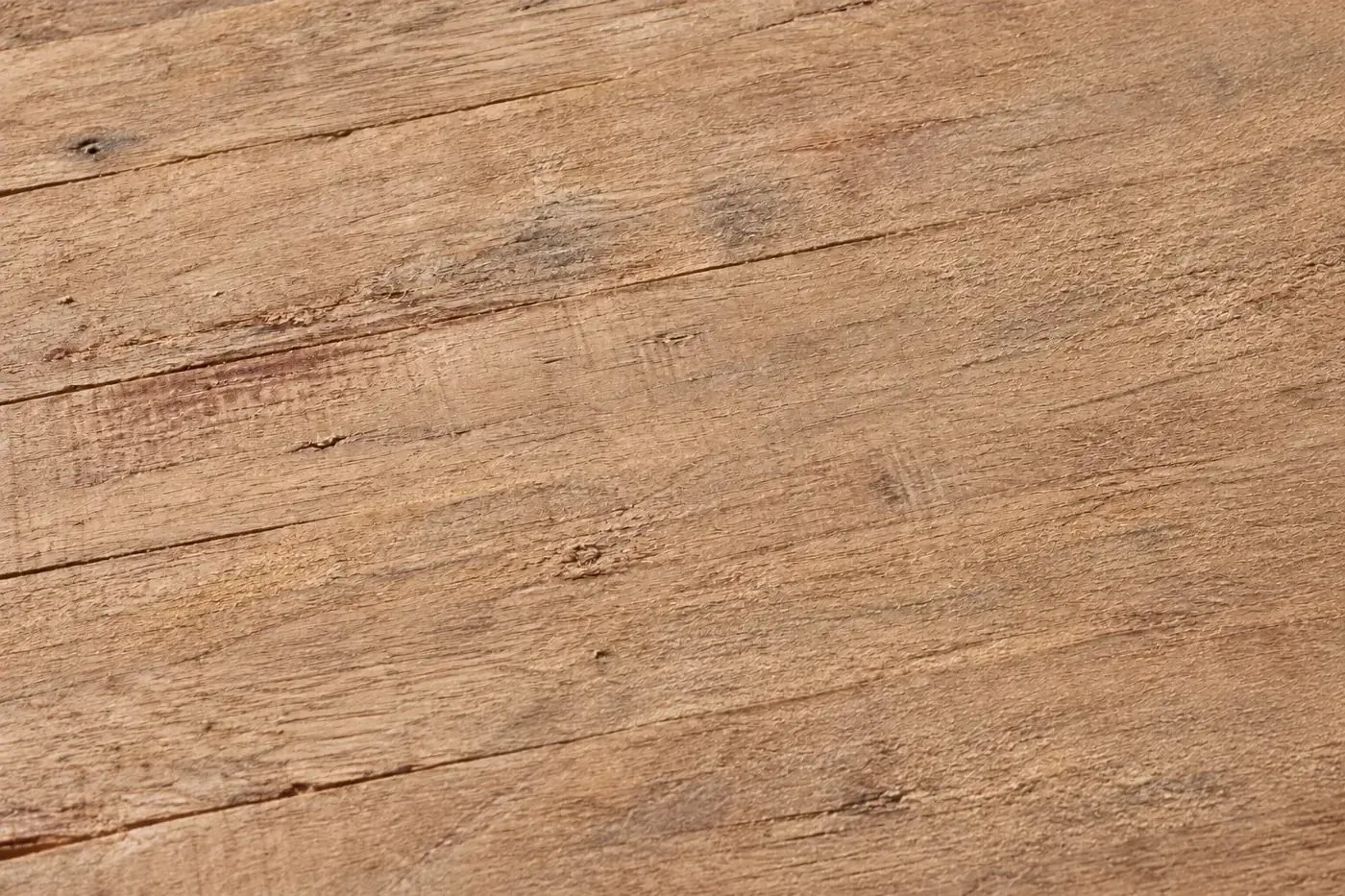
Rough desi sal timber with natural grain and surface cracks.
In short
- Desi sal (sakhu) is Shorea robusta. “Malaysian Sal” and “Kapoor Sal” are different woods.
- Sal is hard and heavy, but it must be dried with care or it can crack and bend.
- Sal heartwood is durable, but no piece is termite-proof. Sapwood and damp spots need extra care.
- “UP sal” or “Uttarakhand sal” is not a quality grade. Check the actual pieces.
- Compare prices on the same grade, the same finished size and the same work included.
A chaukhat has a tough job. It carries the door shutter, holds the hinges and keeps the opening square through years of daily use. Sal (sakhu) is a common choice for this work in north India, but its name is only the starting point. The quality of the pieces you get, and how well they were seasoned, matter just as much.
If you are buying sal for a house in Lucknow, or comparing wood from Uttar Pradesh and Uttarakhand, look at the actual timber before you decide on region or price.
What sal wood is
Indian sal is Shorea robusta. It is also called sakhu, saakhu or sakhua; the spelling changes from market to market. It is a different species from teak (sagwan), which is Tectona grandis.
“Malaysian Sal” and “Kapoor Sal” are not other names for Shorea robusta. They can mean other imported timbers. Ask the seller to write the wood’s identity on the quotation, so you compare like with like. Our guides on Malaysian sal and kapur (Kapoor Sal) explain those names.
Look, grain and weight
Sal is generally a hard, heavy wood. The heartwood is brown and can get darker over time; the sapwood is usually paler. The grain is often interlocked and the texture medium to coarse. A planed surface may show a ribbon-like pattern.
These are useful signs, but they are not a reliable test on their own. Colour changes from piece to piece, and with planing, lighting and finish. A stained sample can look very different from an unpolished piece.
For a door that people will see, compare the grain and colour across all the pieces chosen for it. For a frame that will be hidden, straightness and sound wood around the joints and fixings matter more than nice grain.
Sal for chaukhat
Sal can be a practical wood for door frames when the pieces are sound, properly conditioned and suit the design. Long sections must be straight, and the hinge and lock areas should be free of defects that get in the way of the work.
Agree the finished frame size after planing and rebating. Buying a rough section of a given size does not mean the finished frame will keep that size. The section you need also depends on the opening, the weight of the shutter, the joint design and how the frame is fixed.
A heavy door needs proper hinges, fixings and a frame fitted so it carries the load correctly. Hard wood alone cannot make up for poor fitting.
Sal for doors and windows
Solid wood doors
Sal can be used for doors if the construction suits it, but keep its weight and the way it works in mind. The design must allow the wood to move with moisture, especially in wide panels, and the hardware must suit the finished shutter.
A double door also needs a planned joint where the two leaves meet, the right gaps and reliable alignment. Do not judge the job only by how a small sample looks.
Windows
For windows, the wood is only one part of the job. Outside joinery also needs the right profiles, water drainage, protected joints and a suitable finish. A sill that keeps getting wet, or an unprotected end, can spoil otherwise good work.
A window in a covered inside area and a window facing monsoon rain should not get the same advice until someone has looked at the site.
Durability and deemak (termite)
Sal heartwood is known for being durable, but that does not make every piece termite-proof or rot-proof. Sapwood, damaged wood and places that stay damp need separate care.
Look for insect holes, soft spots and signs of rot. Ask what treatment, if any, is planned for your exposure and your wood. A treatment claim should name a real process. A dark colour or a coat of polish does not prove the wood is protected.
Why careful seasoning matters
Sal needs care while drying. A surface that looks dry can hide uneven moisture or drying stress inside, and drying it too hard and fast can cause cracks (checking) or bending. A strong wood still needs proper seasoning.
Ask the maker to check moisture before machining, and again during production where needed. A moisture meter has to be set and read correctly for the species, the section size and the testing method.
No single percentage suits every building. The target should depend on the use and the place where the wood will be fitted. BIS IS 287 gives Indian recommendations on timber moisture content for different uses.
Old wood is not automatically better
The age of the tree and how long the boards were stored are two different things. Neither is a full quality grade. An old board kept in a damp place can still be unfit for use, while well-dried, well-chosen stock can do well without any big age claim.
Ask for proof of the wood’s condition. Do not rely on words like “old” or “fully seasoned” when nobody has measured anything.
What to check in sal timber
Check several pieces from the lot, including the ends and the full length. A good-looking face should not distract you from a split, a bend or a defect where a joint has to be cut.
| Defect | Why it matters |
|---|---|
| High or uneven moisture | The wood can move later and spoil the fit and alignment. |
| Deep cracks | Reduce the usable size and can weaken a joint. |
| Large or badly placed knots | Get in the way of machining and joints, and spoil the look. |
| Bow | A bend along the face. A problem in long pieces. |
| Crook | A bend along the edge. Makes straight sections hard to get. |
| Twist | The corners do not sit flat. A real problem for frames. |
| Cup | A curve across the width. Reduces the usable thickness. |
| Insect damage | Check how far it goes and whether enough sound wood is left. |
| Fungal rot | Soft or decayed wood can lose strength. |
| Too much sapwood for the order | Do not expect it to last like selected heartwood. |
Where the defect sits matters. A small mark in an offcut that will be cut away may be fine; the same mark at a hinge, a tenon or a narrow part of the frame may not be. Agree the usable grade before work starts.
Sal from UP vs Uttarakhand
Both can be Shorea robusta. The region name does not make one better than the other. Growing conditions, the individual tree, how it was sawn, the grade and the drying all create differences within either supply.
Also, the place where a log grew and the depot where it was sold are two different things. Ask what the papers actually show, instead of assuming the depot location proves which forest the wood came from.
| Sal from Uttar Pradesh | Sal from Uttarakhand | |
|---|---|---|
| Species, when correctly identified | Shorea robusta | Shorea robusta |
| Common name | Sal / sakhu | Sal / sakhu |
| Source | Check the origin separately from the sale depot | Check the origin separately from the sale depot |
| Wood character | Varies by tree and lot | Varies by tree and lot |
| Grain | Check each piece | Check each piece |
| Moisture | Measure it and condition the wood for its use | Measure it and condition the wood for its use |
| Durability | Check heartwood, condition and exposure | Check heartwood, condition and exposure |
| Best way to judge | Actual grade and suitability | Actual grade and suitability |
Sal wood price: compare like with like
Sal prices depend on grade, sizes, available lengths, seasoning, supply and processing. A rate for rough timber is not the same as the price of a finished frame.
Ask whether the measurement is on rough or finished sizes, and allow for the wood lost in sawing, planing and cutting out defects. For a finished product, compare the wood, joints, hardware, finish, delivery and fitting together.
Keep the material description and source records with your bill. If the seller claims a certification or a particular origin, ask for the papers instead of accepting a general promise.
Our own desi sal (sakhu) chaukhat is from ₹211 per running ft with a single rebate (4 × 2.5 to 6 × 3 inch sections) or from ₹260 with a double rebate (5 × 2.5 to 6 × 3 inch sections).
Sal vs teak for doors and frames
Both woods are useful in joinery. The choice should follow the job, the actual grade, the exposure, the look you want and your budget. Teak’s name does not make every teak board better than every sal board, and sal’s hardness does not settle the question either.
| Sal | Teak | |
|---|---|---|
| Scientific name | Shorea robusta | Tectona grandis |
| Common Indian name | Sal / sakhu | Teak / sagwan |
| Where it grows naturally | South Asia | Parts of South and Southeast Asia |
| Hardness and strength | Generally hard and heavy; grade matters | Good joinery wood; grade matters |
| Natural durability | Check heartwood and exposure | Check heartwood and exposure |
| Grain | Often interlocked; medium to coarse texture | Varies; choose pieces to suit the look and the work |
| Natural extractives (substances in the wood) | Do not expect teak-like properties | Affect its durability and how it takes a finish |
| Seasoning | Needs careful drying and conditioning | Still needs drying and conditioning |
| Doors | Choose the wood, construction and hardware | Choose the wood, construction and hardware |
| Windows | Specify the wood, design and protection | Specify the wood, design and protection |
| Chaukhat | Sound, straight pieces at the right finished size | Sound, straight pieces at the right finished size |
Ordering sal doors or chaukhats from NordWood
Start with the opening measurements, the shutter design and the site conditions. When you visit our workshop, compare the actual sal stock and an unpolished sample, then agree the finished sections and the surface finish.
NordWood offers on-site consultation and workshop visits. Fitting is free for doors and windows; chaukhat fitting is available on request for a small charge. Write the wood, sizes, hardware and finish into the order, so everyone is clear before work starts.
Before you accept the fitting, check that the frame is square, the shutter moves freely and the hardware is tight. Ask how to look after the finish and whom to call if an adjustment is needed.
Call or WhatsApp +91 92358 06346, or see our desi sal (sakhu) chaukhat price.
Choose desi sal with a clear frame drawing, wood you have inspected and an agreed finishing plan.
Desi sal (sakhu) chaukhat price at NordWood
| Product | Price |
|---|---|
| Desi Sal Chaukhat (Door Frame) – Double Rebate5 × 2.5 to 6 × 3 inch sections | from ₹260 |
| Desi Sal Chaukhat (Door Frame) – Single Rebate4 × 2.5 to 6 × 3 inch sections | from ₹211 |
Prices from our current list. Other sizes are made to order. Chaukhat fitting is available on request for a small charge.
Questions people ask
Are sal and sakhu the same wood?
In this guide, both names mean Indian sal, Shorea robusta. Confirm this with the seller, because market names can be loose.
Is sal good for door frames?
It can be, when the pieces are sound, the right size, properly seasoned and fitted correctly for the door.
Is Uttarakhand sal always better than UP sal?
No. The region name alone does not give a reliable quality ranking. Compare the actual grade, straightness, defects and moisture.
Will a sal door warp?
Any solid wood can move when moisture changes. Good selection, drying, storage, construction and fitting lower the risk. No wood name guarantees zero movement.
Can I leave sal unpolished?
An unpolished sample shows the natural surface, but the final protection should suit the use and exposure. If you want a natural look, test a suitable finish on an offcut before you approve it.
Can I judge quality by weight?
Weight is only one sign, and it changes with moisture and size. It does not prove the species, the seasoning or the usable grade.
Is sal cheaper than teak?
It is often looked at as a lower-cost option, but compare current quotations for the same grade, sizes and finished work. Do not assume a fixed price difference.
Plan your doors and frames with us
See the wood at our workshop, get a clear price for your sizes, and free fitting for doors and windows.
Read next
Further reading
- ICFRE field identification handbook: identity and features of Shorea robusta (archived copy)
- BIS IS 287: timber moisture content recommendations
- USDA Wood Handbook: moisture, drying, decay, construction and finishing
- FRI wood testing and identification services (archived copy)