 Doors · Chaukhat · Windows
Kapur (Kapoor Sal) Wood for Chaukhat: Uses and Buying Guide
“Kapoor Sal” is a market name, so first confirm the wood is really kapur. Then check seasoning, finished size and termite protection before you order a chaukhat.

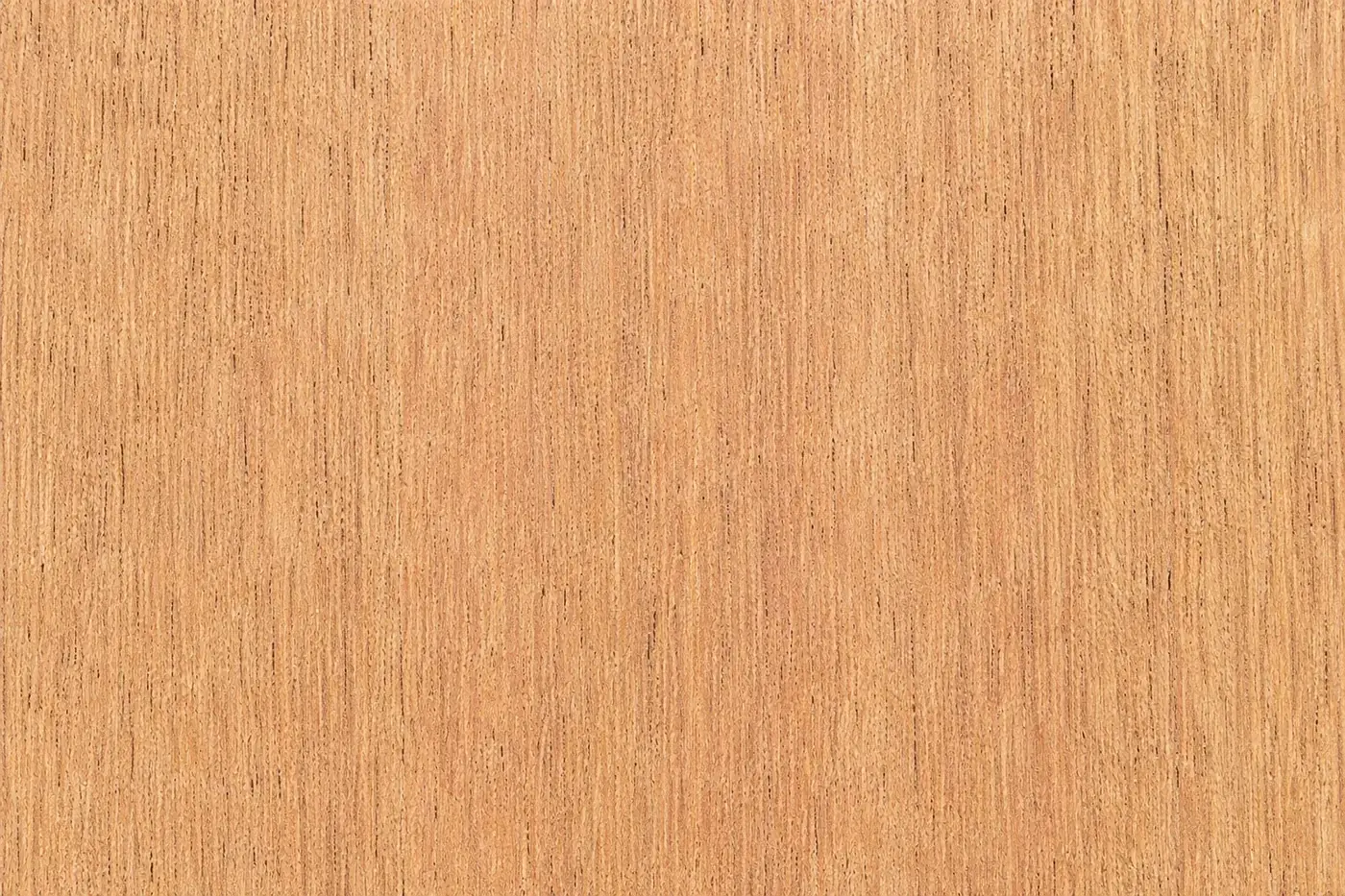
Close-up of the reddish grain in Kapoor Sal timber.
In short
- “Kapoor Sal” is a market name. Ask the seller to write the actual wood (kapur, Dryobalanops) on the quotation.
- Kapur is not the same as desi sal (sakhu, Shorea robusta), even though both names have “sal” in them.
- Kapur is not termite-resistant. Plan deemak protection at the site and keep the frame away from damp.
- Ask for moisture readings, and agree the finished size after planing, not the rough size.
- Compare prices only for the same wood, the same finished size and the same work included.
If the quotation for your chaukhat says “Kapoor Sal”, first ask the seller which wood they mean. The name is common in the Indian timber trade, but on its own it does not point to one fixed species.
When the wood is confirmed as kapur, it belongs to the Dryobalanops group. That is a different timber from Indian sal or sakhu, which is Shorea robusta. Putting “sal” in a market name does not make two woods the same.
This guide is about real, identified kapur and the checks that matter when you buy it for a chaukhat, door or window. The aim is simple: compare the actual wood and work, not just the name.
Kapur vs Indian sal (sakhu)
Both are hardwoods used in building work and joinery, but you cannot swap one for the other and expect the same result. The table below is for documented kapur. If someone offers you “Kapoor Sal”, ask them to confirm what it actually is.
| Kapur (identified) | Indian sal / sakhu | |
|---|---|---|
| Botanical name | Dryobalanops timber; confirm it on any “Kapoor Sal” quotation | Shorea robusta |
| Genus | Dryobalanops | Shorea |
| Family | Dipterocarpaceae | Dipterocarpaceae |
| Comes from | Southeast Asia; confirm the actual origin | South Asia; confirm the actual origin |
| Heartwood | Usually reddish-brown | Brown, often gets darker with time |
| Sapwood | Usually paler and clearly different | Usually paler; check the actual piece |
| Grain | Straight, interlocked or spiral | Often interlocked |
| Density | Published range for the group: 575–815 kg/m³; the wood’s condition matters | Generally heavy; varies with the timber and its moisture |
| Strength | Choose grade and section size for the job | Choose grade and section size for the job |
| Durability | Depends on species and exposure; not termite-resistant | Heartwood is durable; still no termite-proof guarantee |
| Uses | Frames, joinery, building work | Frames, building work, other timber uses |
| Market names | Kapur; “Kapoor” or “Kapoor Sal” may need checking | Sal, saal, sakhu, sakhua |
For more on sal itself, read our desi sal (sakhu) guide. Another trade name that causes the same confusion is covered in our Malaysian sal guide.
What kapur looks like
Kapur heartwood is usually reddish-brown. The sapwood is paler, a yellowish-brown. The texture is fairly coarse, and the grain can be straight, interlocked or spiral. Freshly cut kapur can smell a little like camphor.
These are clues, not proof. Colour changes with planing, finish and exposure, and a photo cannot tell you the exact species.
The STIDC kapur profile gives a density of 575–815 kg/m³. Treat this as a published range for the timber group. It is not a measurement or a grade certificate for the wood in your order.
Kapur for chaukhat
Kapur is documented for door frames, window frames and other joinery. It can be a practical choice when the wood is correctly identified, well dried and the frame design suits the job.
For a chaukhat, ask to see the long pieces. Check:
- that each piece is straight,
- that the ends are not split,
- the spots where the joints, hinges and lock will be cut.
A defect in a short offcut may not matter. The same defect at a hinge position does.
Agree the finished size after planing and rebating (cutting the step where the door shutter sits). A rough piece sold as 4 × 2.5 inches will not always stay 4 × 2.5 inches after machining. The size, and which way the section faces, should suit your door, the wall opening and the fixing, not just whatever stock the seller has.
Kapur for doors and windows
Door shutters
Identified, properly prepared kapur can be used for solid wood or panelled doors. Choose the boards and the construction to suit the size of the shutter and how much sun and rain it will face. A heavy design also needs strong enough hardware and a frame that can carry the weight.
Window frames
A window has to let rain water drain away and keep its joints and glass fixing protected. The wood is only one part of this. Ask about the profile, seals, coating and the upkeep plan, especially where rain hits the frame directly.
Other uses
Kapur is also documented for building work, flooring and furniture. That does not mean every board suits every job. Grade, defects, size and treatment still matter.
Kapur and deemak (termite)
Do not buy kapur on a promise that it is termite-proof. Business Queensland’s kapur profile lists it as not termite-resistant. Resisting rot and resisting termites are two different things.
Published durability ratings also change with the exact species, the test conditions and whether the wood was above ground or touching soil. A test rating is not a guarantee for a door fitted in your house.
Seasoning: check the wood as it is today
Kapur needs controlled drying. A board can look dry on the surface while the moisture inside is still uneven, especially in thick sections.
Ask the seller for:
- current moisture readings,
- how the wood was dried,
- the moisture target agreed for the place where the frame will be fitted.
The USDA guidance on drying explains that how the wood is stored and conditioned after drying matters too.
There is no single moisture percentage that is right for every chaukhat. An air-conditioned room, a covered entrance and a window open to rain are not the same conditions.
Air drying and kiln drying can both be part of the process. What matters is that the wood reaches a suitable, fairly even moisture level without bad cracks (checks), bending or drying stress.
Old tree or old stock: not the same thing
When a seller says the wood is “old”, they may mean the tree was old, or that the wood was sawn long ago. Neither one tells you the full quality.
Wood that sat for years in a damp godown may still need conditioning. And properly prepared wood does not need a big age claim to be useful. Look at the wood itself, and if age is part of the sales pitch, ask for proof.
Checks before you order
- The quotation names the wood: Dryobalanops (kapur) or another recognised timber name.
- Ask for the origin, the grade and any source papers available.
- Look along each piece for bow, crook and twist.
- Check both faces and both ends for splits, rot and insect damage.
- Look at knots and grain where the joints and fittings will go.
- Confirm how much heartwood and sapwood is included.
- Measure the actual sizes and agree the finished sizes.
- Ask for moisture readings and how the wood was seasoned.
- Ask how the wood will be stored and protected until fitting.
Do these checks on the actual stock, or on pieces set aside for your order, not just on a polished sample.
Why the workmanship matters
A chaukhat has to stay square, hold its hardware and fit the wall opening. Accurate machining, the right joints and careful fixing are what turn good wood into a frame that works.
The same goes for finishing. Agree the surface preparation and coating for the actual exposure, including end grain and edges. If you order an unpolished product, decide who will polish it and how it will be protected until then.
For windows and outside doors, no polish can make up for a design that traps water.
Kapur, teak, sal or sheesham
Start with the job the wood has to do.
- Teak (sagwan) is valued because it holds its shape well and its heartwood is durable.
- Sal (sakhu) is a heavy, solid hardwood that dries and works differently.
- Sheesham has its own grain, look and building uses.
A fair comparison uses identified wood, the same finished sizes and similar work. Do not compare the cheapest rough timber rate of one wood with the finished product price of another.
What decides the price of kapur
A quotation depends on:
- the species or timber group,
- grade,
- sizes,
- clear usable lengths,
- defects,
- seasoning,
- transport and availability.
Bigger pieces with fewer defects can give more usable parts, even if their rate looks higher at first.
For a finished door or chaukhat, also compare the design, machining, joinery, hardware, finish, delivery and fitting. Get what is included in writing. There is no one reliable price for everything sold as “Kapoor Sal”.
Our own Kapoor Sal chaukhat is from ₹191 per running ft with a single rebate (4 × 2.5 to 6 × 2.5 inch sections) or from ₹234 per running ft with a double rebate (5 × 2.5 to 6 × 2.5 inch sections).
Ask where the wood came from
Ask where the timber came from and what papers back up the supply. If the seller claims a certification, check that it covers both that seller and the wood being sold.
A country name, a nice grain or the word “imported” does not, on its own, prove the wood was sourced responsibly.
Ordering a kapur chaukhat from NordWood
Bring your opening sizes, your door design and details of where the door will be (inside, under a covered entrance or open to rain). Visit us in Daliganj, Lucknow, and we can compare the timber we have, show you the finished section and agree the finish and fitting. Chaukhat fitting is available on request for a small charge.
For a clear quotation, write down the wood identity and the finished product. “Kapoor Sal frame” alone leaves too much open.
Call or WhatsApp +91 92358 06346, or compare our Kapoor Sal chaukhat with a single rebate and the Kapoor Sal chaukhat with a double rebate.
First confirm what the wood actually is, then check its seasoning and the full chaukhat specification.
Kapoor Sal chaukhat prices at NordWood
| Product | Price |
|---|---|
| Kapoor Sal Chaukhat (Door Frame) – Single Rebate4 × 2.5 to 6 × 2.5 inch sections | from ₹191 |
| Kapoor Sal Chaukhat (Door Frame) – Double Rebate5 × 2.5 to 6 × 2.5 inch sections | from ₹234 |
Prices from our current list. Other sizes are made to order. Chaukhat fitting is available on request for a small charge.
Questions people ask
Is Kapoor Sal the same as kapur?
A quotation may use the name that way, but confirm the wood with the seller. In this guide, kapur means Dryobalanops timber.
Is kapur the same as Indian sal or sakhu?
No. Indian sal is Shorea robusta. Kapur is Dryobalanops timber.
Is kapur good for door frames?
It has documented use in frames and joinery. Whether it suits your job depends on the actual wood, its seasoning, the sizes, the exposure and how the frame is made.
Can kapur be used outside?
Plan it for the actual exposure. Talk through durability, termite protection, finish, water drainage and upkeep. Do not assume the wood is weatherproof by itself.
Does kapur need kiln drying?
What you need is the right moisture level, not just a “kiln-dried” label. Air drying, kiln drying and conditioning afterwards should be chosen to suit the wood and the job.
How can I tell good kapur?
First confirm the wood from the papers and the quotation, then check its condition and sizes. Smell and colour are clues, not proof.
Plan your doors and frames with us
See the wood at our workshop, get a clear price for your sizes, and free fitting for doors and windows.
Read next
Further reading
- STIDC: Kapur timber profile
- Business Queensland: Kapur properties and durability
- USDA Forest Products Laboratory: drying and moisture control