 Doors · Chaukhat · Windows
Plantation Teak Wood: Quality, Uses and What to Check Before Buying
Plantation teak is real teak grown on planted land. Here is how to check its heartwood, seasoning, sizes and price before you order a door, window or chaukhat.

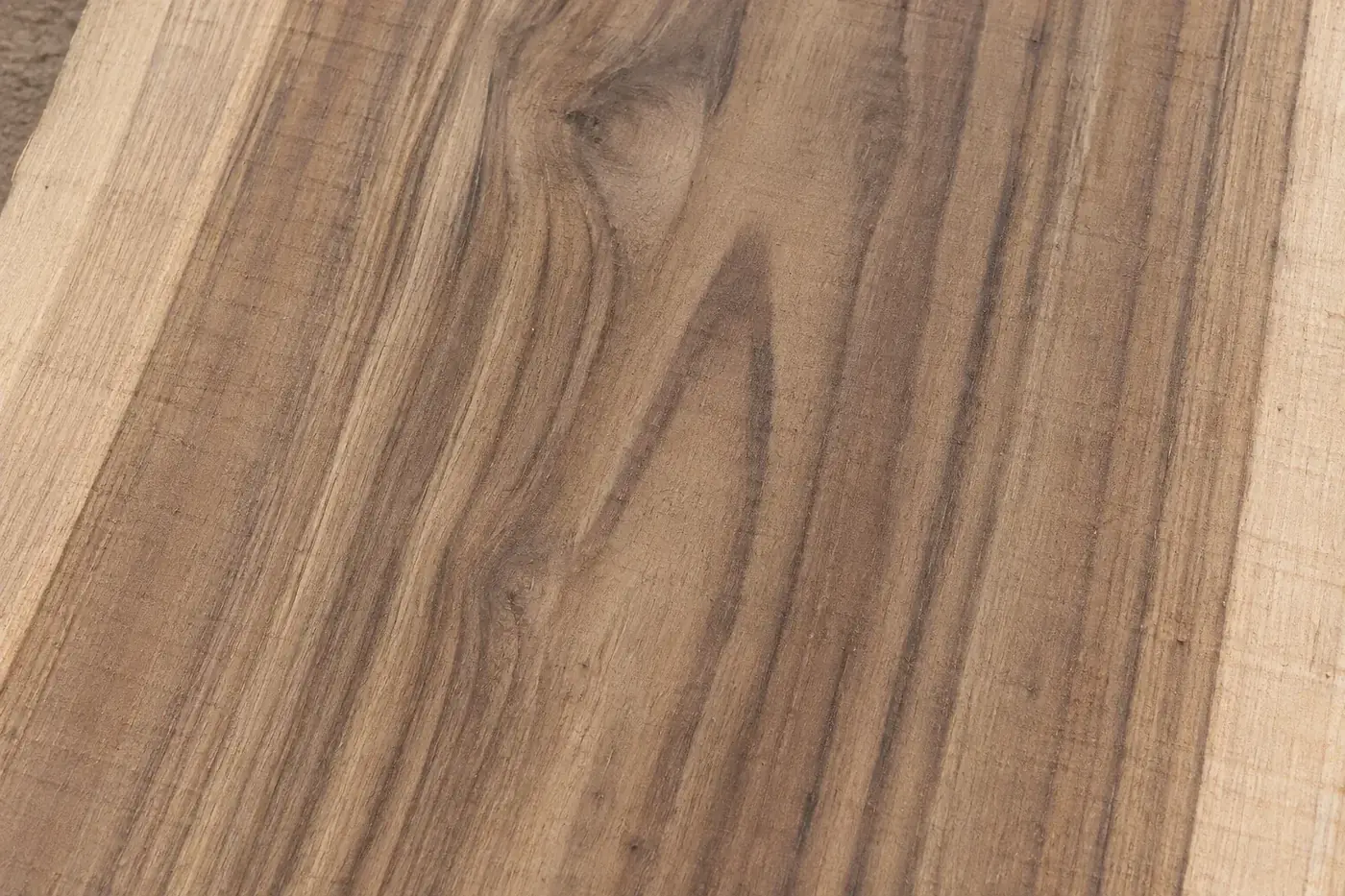
Plantation teak grain, close up. Photos are for reference; compare with a sample from current stock.
In short
- Plantation teak is real teak (sagwan). “Plantation” only tells you how the tree was grown, not how good the boards are.
- Judge the actual wood: sound heartwood, straightness, defects, real finished size and moisture.
- A tree-age claim, wide growth rings or a dark colour prove nothing on their own.
- Compare full door quotations, not just the CFT rate, and check how the CFT was worked out.
- No teak is termite-proof or maintenance-free. Good making, fitting and finish still matter.
Plantation teak can be a good choice for a door, window or chaukhat. The useful question is not “is plantation teak better or worse than forest teak?” It is whether the wood you are shown has enough sound heartwood, the right sizes, no serious defects and proper seasoning for your job.
“Plantation” only tells you how the tree was grown. It does not tell you the grade of the boards, how dry they are, or how well the finished door will be made.
What is plantation teak?
Plantation teak is teak (Tectona grandis, called sagwan in India) grown on planted land instead of in a natural forest. It is the same tree as forest teak, not a different species.
Teak is planted in India and in many other tropical countries. African supply comes from Ghana, Benin, Togo, Nigeria, Côte d’Ivoire (Ivory Coast) and Tanzania. There are also plantations in South-East Asia and Latin America. The FAO’s work on teak plantations shows that the land, the climate and the way a plantation is managed all affect the wood it gives.
A plantation can give good timber for doors and frames. But the word “plantation” alone does not prove that the land was managed responsibly, or that the wood can be traced back to where it came from.
Plantation, forest, imported: what each name tells you
These words describe different things, so do not mix them up:
- Plantation / forest tells you where the tree grew: on planted land or in a natural forest.
- Imported tells you how the wood reached India. So one board can be plantation teak and imported teak at the same time.
- Nigam teak usually means teak sold through a state forest corporation (van nigam).
- Burma teak is a trade name based on a place (Myanmar). It should not be used for every piece of old or forest-grown teak.
When you compare two pieces, look at the board itself: sound heartwood, defects, usable size, grain and how well it was dried. Wider growth rings (the rings on the cut end) or a darker colour do not prove that one piece will perform better than another.
What plantation teak looks like
The heartwood (the darker inner part of the log) is usually golden-brown to brown, sometimes with darker streaks. The sapwood (the outer part, near the bark) is usually paler. The grain can be straight, wavy or strongly patterned, and boards lying next to each other will not always match.
Choose the board for the job. A bold grain can look very good on a panel that people will see. A straighter piece is often better for a long frame member. The way the log is sawn also changes how the grain looks.
What to check (it matters more than tree age)
1. Sound heartwood
Teak heartwood resists decay naturally. Sapwood does not have the same resistance, so do not assume it does. Ask how much sapwood will be in your order and where it will be used, especially in parts that face sun and rain.
Heartwood matters, but it does not make up for deep cracks, rot or knots in the wrong place.
2. Straightness and real usable size
Check each board along its full length for twist, bow (a curve along the length), splits and other defects. A big rough piece can give a much smaller clean piece once the defects are cut out and it is planed.
- For a door: ask which boards will become the stiles (side members), rails (cross members) and panels.
- For a chaukhat: check the finished size after the rebate (the step the door closes against) is cut and the wood is machined.
3. Moisture and seasoning
Wood keeps taking in and giving out moisture from the air even after it is fitted. Teak moves less than many woods, but it does move. Nobody can honestly promise that a teak door will never stick, crack or open at a joint.
Do not trust a single “8–12% is right for everything” rule. The right moisture level depends on where and how the wood will be used, and readings should be taken across the wood, not on one spot. The Indian standard BIS IS 287 gives recommended moisture levels by use and by climate.
4. Tree age and source papers
A claim about the tree’s age helps only if it can be backed up, and even then you still have to judge the wood itself. There is no fixed age after which plantation teak becomes right for every door.
Young and mature trees can differ in heartwood and wood quality. But the land, the tree’s genes, how the plantation was looked after, defects and processing all matter too. Ask the seller what they can actually show on paper.
Where plantation teak works well
Doors
Well-chosen plantation teak suits panel main doors, inside doors and decorative woodwork. The door must be made so the wood can move a little, and the hinges and screws must suit the weight of the shutter.
A main door under a porch and one open to direct sun and rain need different protection. Even a durable wood needs a suitable polish or coating and good fitting.
Windows
Judge the whole window, not just the wood: frame and shutter (sash) sizes, glass, seals, water drainage and hardware. Teak’s stability helps, but on its own it is not a reason to make the frame thinner or the glass bigger. Sizes must be worked out for the actual opening and the load on it.
Chaukhats (door frames)
A chaukhat must stay straight and hold its fixings tightly. Look for good long pieces, sound wood around the joints and hinge points, and the right moisture level for fitting.
Where the frame meets the wall and the floor, the work should be done so that water does not keep soaking into the wood. No wood name can make up for a damp opening or poor fixing.
Furniture and other woodwork
Plantation teak is also used for furniture and decorative work. Whether a particular board suits depends on its grade, its size and how much weather it will face.
Plantation teak and other woods
| Material | What to know | What to compare |
|---|---|---|
| Indian sal / sakhu (Shorea robusta) | A different species. Heavy and strong, so it can suit frames and other hard-working parts. Teak is valued for its looks, easy working and stability. | Both need proper seasoning. Compare the actual wood and the quotation; neither is best for every job. |
| Sheesham (Dalbergia sissoo) | Known for its bold grain and used a lot for furniture. | For a door, compare grade, seasoning, sizes and exposure. Good-looking grain does not prove it can take outdoor weather. |
| Mahogany | The name covers different groups of trees. | First confirm which wood it really is, then compare movement and rot resistance. “All mahogany is only for indoors” is too broad a claim. |
| Pine | Covers many species and grades. Some softwoods work well in doors and windows with the right design, treatment and coating. | Teak’s durability and looks may justify its higher price for some jobs, but compare the full specification. |
| Plywood, MDF, laminated timber, engineered doors | Not all the same: the core, glue, grade and finish differ. | A properly specified engineered product can be fine for the use it is rated for. Ordinary MDF does not represent the whole group. |
Is plantation teak sustainable?
It can be part of a responsible supply, but the word “plantation” alone is not proof. Ask about the source, how the land is managed and whether the wood can be traced. If a seller claims a certificate, check that it really covers that supplier and that product.
A certificate and quality answer different questions. A certified board still has to be checked for grade and moisture. And a good-looking board tells you nothing about how its source was managed.
What decides the price
The price of plantation teak depends on:
- the sizes available, and how much of each piece is usable heartwood
- defects and grade
- drying and processing
- where the wood comes from, and the cost of bringing it here
Large clear pieces (without defects) can be worth more than smaller pieces of the same total CFT.
For a finished door, compare the full price: machining, joinery, polish, hardware, delivery and fitting. No article can give a reliable rate for every size and specification today, so ask for a written quotation for your own sizes.
For our own ready sizes, plantation teak (sagwan) doors start at ₹14,350 for a single door and ₹16,395 for a double door set, and our plantation teak window starts at ₹8,900. Each one is in the price list below.
How to check the CFT
When you compare rough timber, check how the volume was worked out. With thickness and width in inches and length in feet:
CFT = thickness × width × length ÷ 144
Example: a piece 5 inch × 3 inch and 7 ft long is 5 × 3 × 7 ÷ 144 = 0.73 CFT. Keep the units the same, and ask whether the sizes quoted are rough or finished. Our guide to CFT and door pricing explains more.
Looking after plantation teak doors and windows
- Clean gently, and follow the care instructions for the finish that is actually on the wood.
- Do not put teak oil, polish or wax on it just because it is teak. It may not suit the coating already there.
- Keep an eye on exposed edges, joints, glass seals and the wood around hinges and handles.
- Repair worn coating, and any spot where water gets in, quickly.
- How often to re-polish depends on how much sun and rain the door gets and which finish was used. A fixed “every one or two years” rule does not fit every house.
Untreated teak turns grey outdoors. A grey surface does not mean every joint and piece underneath is still sound, so check those too.
Buying plantation teak from NordWood
If you are planning custom doors, windows or chaukhats in Lucknow, bring your design and the opening sizes to NordWood. See the wood we have in person, and settle the finished sizes, exposure (inside, or open to sun and rain) and finish before you confirm the order.
The best order is one you can understand and check yourself:
- the wood is named clearly
- the section sizes suit the job
- the moisture level suits the place where it will be fitted
- the making and fitting details are written down clearly
Visit us at 500/143, Kutubpur, Daliganj, Lucknow, or call +91 92358 06346. You can also send your sizes on WhatsApp.
Choose plantation teak by the actual wood you are shown, where the door will go, and the full door specification, not by the label.
Plantation teak prices at NordWood
| Product | Price |
|---|---|
| Plantation Teak Single Door8 ready sizes, 7 ft and 8 ft high | from ₹14,350 |
| Plantation Teak Double Door10 ready sizes, 7 ft and 8 ft high | from ₹16,395 |
| Plantation Teak Window4 × 3 ft or 5 × 3.5 ft | from ₹8,900 |
| Plantation Teak Chaukhat (Door Frame) – Single Rebate4 × 2.5 to 6 × 3 inch sections | from ₹147 |
| Plantation Teak Chaukhat (Door Frame) – Double Rebate5 × 2.5 to 6 × 3 inch sections | from ₹179 |
| Plantation Teak Jali Door8 ready sizes, 7 ft and 8 ft high | from ₹8,907 |
Prices from our current list. Other sizes are made to order. Fitting is free for doors and windows. Chaukhat fitting is available on request for a small charge.
Questions people ask
Is plantation teak real teak?
Yes, when it is Tectona grandis. “Plantation” describes how the tree was grown, not a different species.
Is plantation teak termite-proof?
No. The heartwood has natural resistance, but the wood, the amount of sapwood and the exposure vary. Termite (deemak) treatment and keeping moisture away still matter.
How long will a plantation teak door last?
No honest seller can give one fixed number. Wood quality, how the door is made, exposure, finish and upkeep all affect its life. Ask what warranty covers the specific product you are buying.
Is forest teak always better?
No. Compare the actual grade and boards. Origin and tree age alone cannot tell you how the finished door will perform.
Can I order an unpolished teak door?
Yes. NordWood sells both unpolished and polished products. Agree on how the door will be stored and finished, so it stays protected until it is in use.
Plan your doors and frames with us
See the wood at our workshop, get a clear price for your sizes, and free fitting for doors and windows.
Read next
Further reading
- FAO: Management of teak plantations
- USDA Forest Products Laboratory: Wood Handbook
- BIS: IS 287 moisture-content recommendations